
LATITUDE
LONGITUDE
APPELATIONS
Ribera del Júcar tells the story of a once-overlooked bulk-wine region that decided to step out of the shadows and claim its own spotlight. Though officially a young DO, established in 2003 from the vast La Mancha plateau, this area surprises with its vivid, mineral-rich reds and distinctive whites, all nurtured by ancient vines rooted in pebbly soils and a climate that’s paradoxically hot in theory yet refreshingly cool in style.
Nestled along the banks of the River Júcar in Cuenca province, central Spain, this Denominación de Origen Protegida boasts high-altitude vineyards that thrive under a continental climate marked by intense contrasts. Its red wines, crafted primarily from the locally cherished Bobal and Tempranillo grapes, capture the essence of the land, delivering character and balance that defy its designation's youth.
This guide invites you to explore Ribera del Júcar like an insider: from its sweeping landscapes and unique terroir to the passionate winegrowers shaping its future, the signature grape varieties, and the evolving story of a region determined to produce some of Spain’s best wines. Discover the influence of the river, the soil, and the climate on every bottle, and uncover why Ribera del Júcar is quickly becoming an established name in the world of Spanish wine.
Ribera del Júcar DO sits in southern Cuenca (Castilla-La Mancha) on a broad plateau cut by the Júcar River. The DO covers these seven municipalities in the province of Cuenca: Casas de Benítez, Casas de Fernando Alonso, Casas de Guijarro, Casas de Haro, El Picazo, Pozoamargo and Sisante. Visuals are simple but striking: an altiplano around 750 m (≈2,460 ft), rounded river pebbles over clay-limestone and old bush-trained Bobal and Tempranillo vines with Syrah, Merlot and other internationals filling out the cast. The total vineyard area in the Ribera del Júcar DOP is approximately 6700 hectares.
The climate swings from cold winters to hot summers, with big day-night shifts that keep acidity and aromatics alive in what would otherwise be a dangerously warm zone. Strategically, the DO was split from “greater La Mancha” to highlight its red-grape focus and fluvial soils, making it feel closer in spirit to Manchuela than to Airén-dominated La Mancha next door. The Ribera del Júcar has a dry, continental climate characterized by extremely hot summers and very cold winters.
Key Regional Statistics
Viticulture here goes back at least to the 17th century: Illana’s Finca Buenavista, for instance, was granted by Philip IV in 1626 and the Teatino monks at Los Teatinos were early commercial growers. In the post-war 1950s, growers formed cooperatives such as Purísima Concepción (1958), Nuestro Padre Jesús Nazareno (1955), La Magdalena, and San Ginés to gain scale and bargaining power. Grapes have been grown and wine produced in the Ribera del Júcar area for centuries.
For decades, this was the “tintero manchego” – the inkwell supplying red grapes into a predominantly white sea. In the 1990s, local leaders pushed for recognition of their river-driven microclimate, stony soils and red-grape bias, culminating in DO status in 2003. The Ribera del Júcar DO was created as a joint initiative of wine-making cooperatives and private wineries in the province of Cuenca. Today, quality control is outsourced to an accredited body, freeing the Consejo to focus on promotion, and an estimated 40–60% of production is exported as the region shifts from bulk to higher-value bottled wine.
Ribera del Júcar has made environmental stewardship part of its identity, not an afterthought. The DO frames itself as a “multifunctional project” around ecosystem balance, sustainable viticulture and rural development, highlighting organic vineyards and the coexistence of pine groves, riverine woods and vines as biodiversity assets.
Las Calzadas farms organically, leaning on altitude and open exposures to reduce disease pressure and on tinaja fermentations to avoid heavy intervention. Illana has converted its entire mixed estate to organic, using a polyculture of cereals, almonds and vegetables to build soil health and resilience.
Deep clay-limestone soils and modest rainfall make water efficiency non-negotiable, so most vineyards remain dry-farmed, relying on the pebbly surface and old bush vines to manage drought. Bobal’s high acidity and drought tolerance, and the zone’s 650–800 m altitude and big diurnals give the DO a built-in climate-change hedge – a “climate barbell strategy” that mixes tough local genetics with modern, quality-driven wineries.

Vineyard Hectares
WINERIES
GROWING DEGREE DAYS
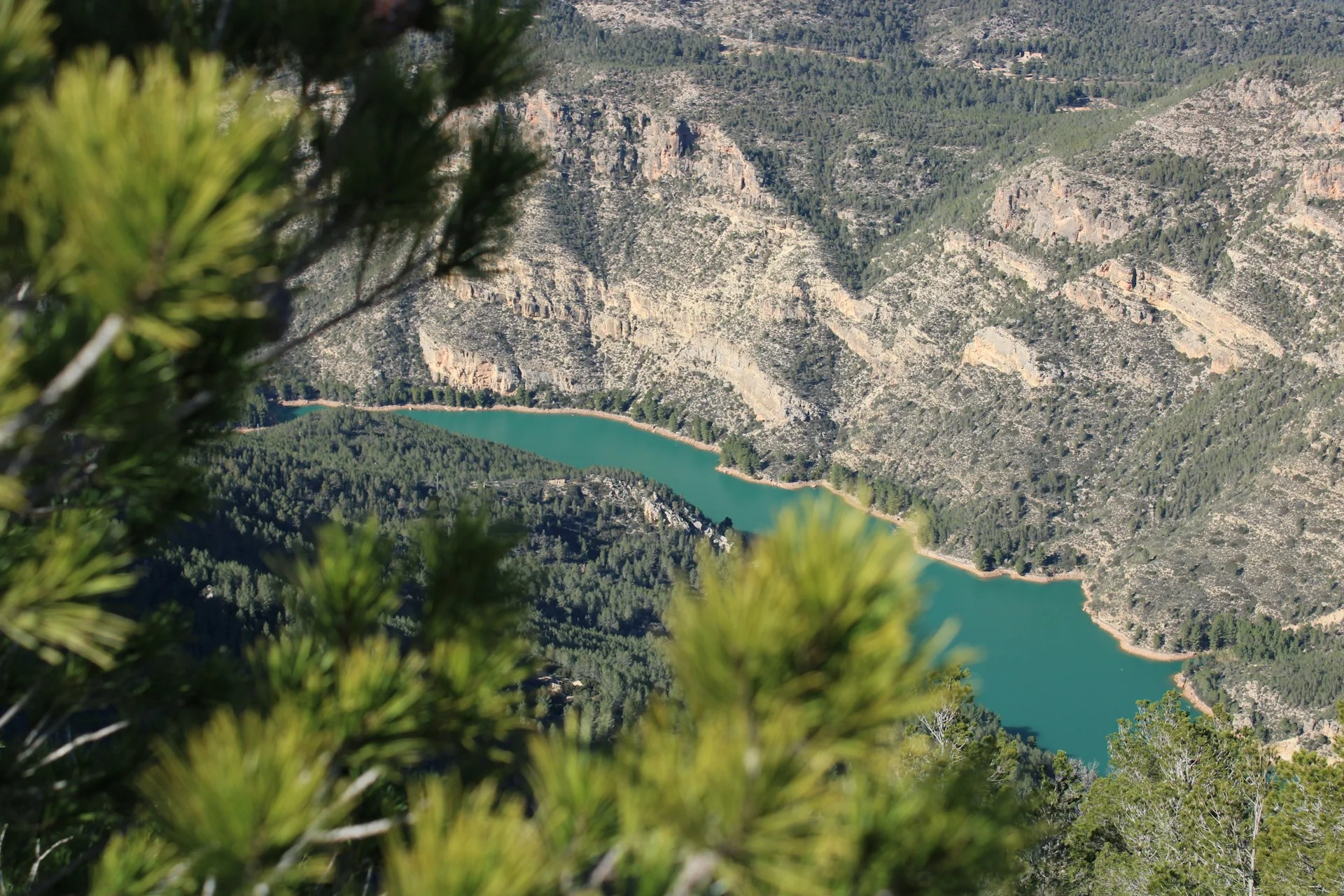
Ribera del Júcar sits on a near-horizontal plateau around 750 m, broken mainly by gentle undulations and the Júcar canyon; from Cerro del Cabezo, you can essentially see the whole DO stitched together. The river moderates temperature, adds humidity and deposits minerals, contributing to the mineral, sometimes graphite-edged character of the reds. The production area of Ribera del Júcar is characterized by its horizontality, consisting of a plain with some buttes.
Soils are the region’s power move: thick surface layers of rounded pebbles and cobbles that reflect sunlight, store heat, and improve drainage, sitting over deep clay-limestone subsoils with strong water-holding capacity. The soil in the Ribera del Júcar region is mainly clay with a stone base layer. The setup is functionally similar to parts of the Rhône, which helps explain why Syrah and Bobal perform so well here.
Ribera del Júcar’s personality is written in its grape mix: Bobal and Tempranillo lead the reds, supported by Merlot, Syrah, Cabernet Sauvignon, Cabernet Franc and Petit Verdot, while Moscatel de grano menudo, Pardilla and Sauvignon Blanc shape the whites. Together, they balance local heritage with an unmistakably modern, international edge. Bobal, in particular, is known for its vibrant array of flavours and aromas, including ripe berries and plums.
The red mix is majority Spanish (Tempranillo, Bobal), with French grapes there to finesse texture and broaden appeal, while Pardilla and Moscatel give whites a distinctly local fingerprint.
The DO’s official styles lean red, but white and rosé are gaining presence.
Across styles, expect intense colour and aroma anchored by a firmer acid spine than many La Mancha wines, especially in Bobal reds and Moscatel/Sauvignon whites. The wines of Ribera del Júcar are particularly known for their intense aroma and balanced body, making them stand out in the region.
Ribera del Júcar’s wines were built for the table, and their bright fruit, firm acidity and savoury edge make them natural partners for everything from rustic central-Spanish dishes to lighter, modern plates.
Ribera del Júcar offers a charming, authentic wine experience far from the hustle of commercialized wine tourism. This rural corridor between Madrid and Valencia invites visitors to explore its official Ruta del Vino, which combines scenic vineyard walks, bodega tours, tastings, and hearty local cuisine—all often integrated with existing rural tourism amenities. Unique accommodations await in converted caves, adding a special touch to your stay. Outdoor enthusiasts can enjoy hiking, cycling, rafting, and kayaking amid the region’s stunning landscapes.
Just a short distance away, the historic city of Cuenca, with its famous hanging houses and fortified old town, is a UNESCO World Heritage Site and a cultural highlight for any wine trip. Along the Júcar valley and its dramatic canyon, cycling and hiking trails abound, while intimate winery visits at estates like Las Calzadas and Illana emphasize the area’s boutique, terroir-driven charm over mass tourism.
History buffs will appreciate landmarks such as the Castillo de Alcalá del Júcar and the Castle and walls of Jorquera. Nature lovers will be awed by the impressive Júcar River Gorge, especially between the villages of Jalance and Cofrentes. Meanwhile, local restaurants in towns like Alcalá del Júcar serve up hearty regional dishes that perfectly complement the wines of Ribera del Júcar.
Bodegas y Viñedos Illana, Bodega Las Calzadas, Purísima Concepción and Sociedad Cooperativa Nuestro Padre Jesús Nazareno together form the backbone of Ribera del Júcar. Each offers a distinct take on the plateau’s pebbly soils and Bobal-driven reds, from artisanal amphora projects to large, quality-focused cooperatives.


Copyright © 2024 Vinerra Corp.


