
Every industry has its comeback story. Apple had its near-death experience in 1997. Marvel was bankrupt before it became a $50 billion empire. In Italian wine, that resurrection narrative belongs to Casavecchia — an ancient red grape variety native to the Campania region in southern Italy, particularly flourishing in the provinces of Caserta and Benevento. So obscure that no ampelographer ever classified it, yet extraordinary enough to have possibly been praised by Pliny the Elder two millennia ago, Casavecchia holds a deep-rooted legacy.
This article examines Casavecchia’s evolution from archaeological curiosity to cult wine, addressing its enigmatic Roman origins, rediscovery amid the ruins of an old house, the influence of Caserta’s volcanic terroir and microclimate, the efforts of pioneering organic producers, and its velvety tannins and aging potential in comparison to Campania’s renowned Aglianico. The following analysis serves as a comprehensive guide for sommeliers and collectors interested in one of the world’s rarest indigenous grape varieties.
Casavecchia (pronounced cah-sah-VEK-kee-ah; for easy recall, think of quickly saying the familiar Italian phrase "casa vecchia") is a red grape indigenous to the province of Caserta in Campania. Primarily cultivated in Caserta and Benevento, its name translates to “old house,” referencing the crumbling ruin called 'a casa vecchia in local dialect, where a lone vine was discovered in the early 1900s. This vine survived the devastating oidium and phylloxera epidemics of the 19th century and became the genetic ancestor of all Casavecchia vines today. Officially recognized in the Italian National Registry of Grape Varieties in the early 2000s, it has only one known synonym: Casavecchia di Pontelatone.
From a winemaking perspective, Casavecchia yields deeply colored red wines with a rich ruby hue that often trends toward purple. The aromatic profile includes wild berries, forest floor, plum, cherry, fresh grass, and spices. According to research by Professor Luigi Moio, the grape is distinguished by its low acidity and high, soft tannins—a rare combination that imparts a notably plush texture on the palate. The mouthfeel is reminiscent of a ripe Merlot, yet supported by a firmer Campanian tannin structure. Casavecchia wines initially present a soft texture but conclude with greater structure and grip than typically expected from low-acid reds. This balance results in wines that are both generous and composed, supple yet structurally sound. Casavecchia demonstrates versatility as both a varietal and blending grape, offering complexity and depth.
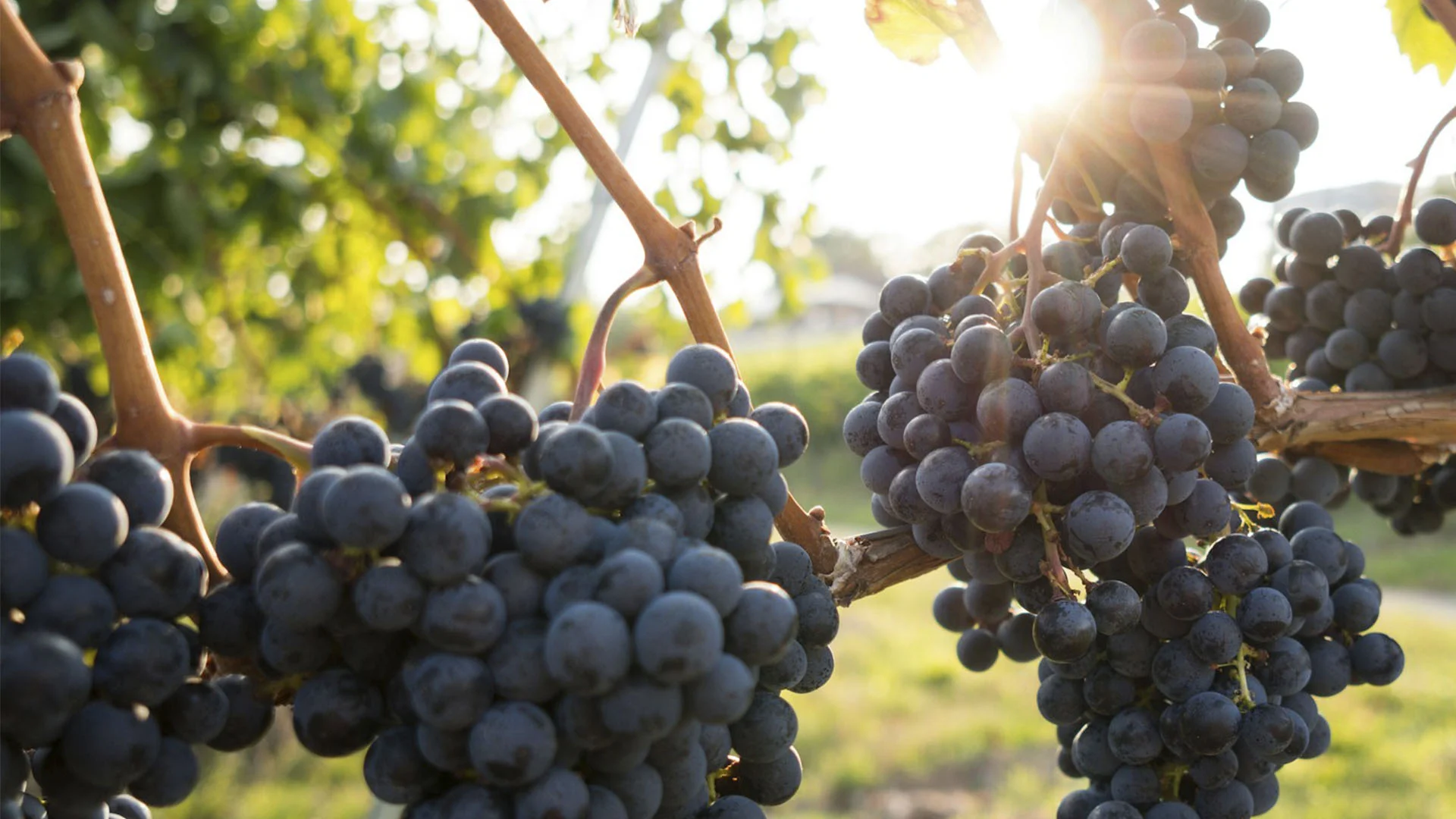
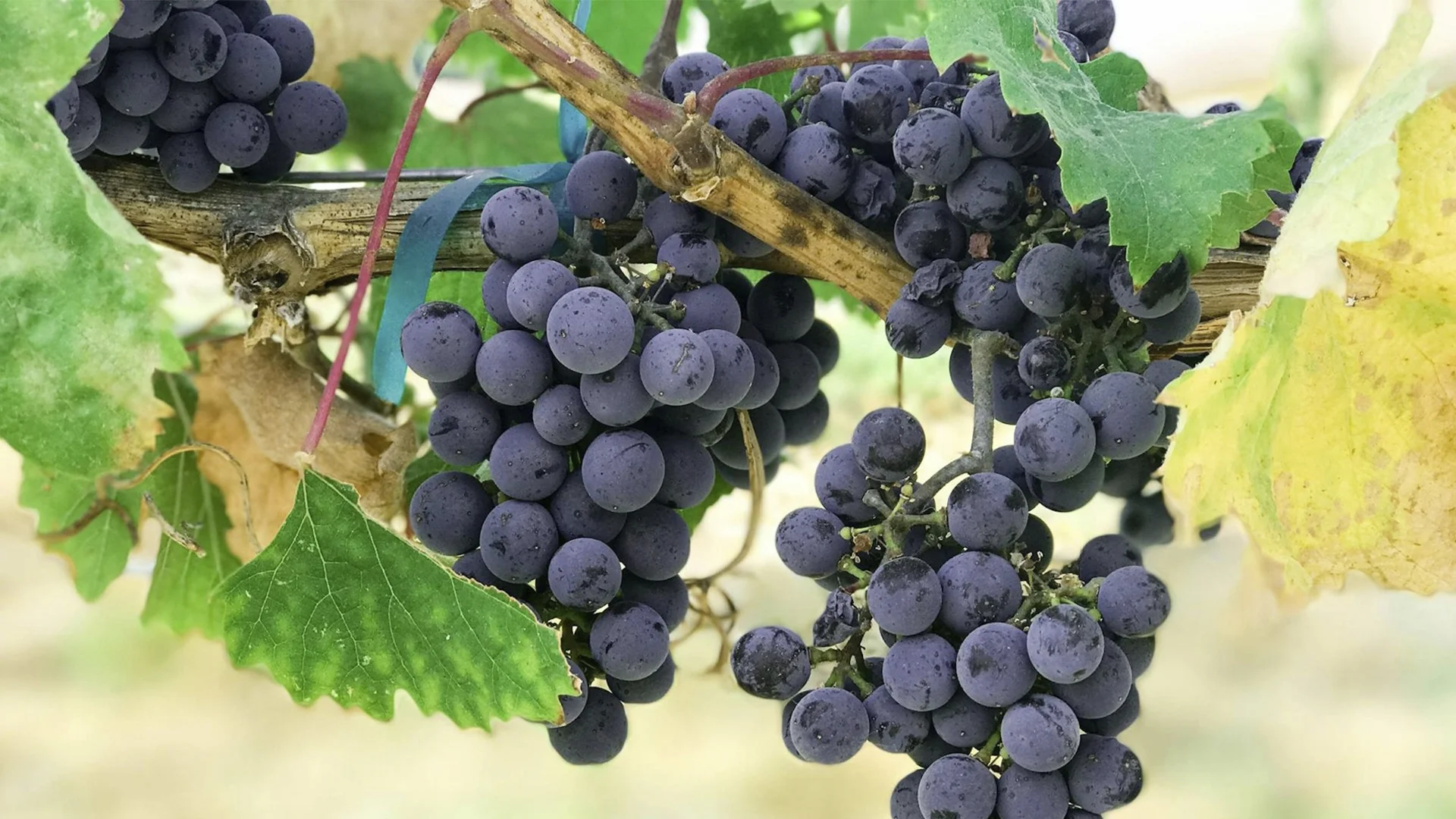
Its clusters are medium to large with sparse berries. This provides a natural defence against mould. The thick, blue-black, waxy skin contributes to intense colour and polyphenolic richness. Naturally low-yielding, Casavecchia prioritizes quality over quantity, embodying the boutique ethos in viticulture.
Casavecchia’s history is a puzzle with many missing pieces. Uncatalogued by ampelographers and genetically unique, it stands as a true genetic orphan. The strongest link connects it to the Roman-era wine Trebulanum, praised by Pliny the Elder in Naturalis Historia as one of Italy’s finest. The ancient Roman site of Trebula Balliniensis aligns precisely with Casavecchia’s modern production zone near Pontelatone, providing circumstantial but compelling evidence.
Rediscovered in the late 19th or early 20th century, an ancient vine was found clinging to life amid the ruins of an old house near Pontelatone. Propagated through traditional methods described by Roman writer Columella, the vine was passed down through generations. Casavecchia’s vigorous vines and low productivity nearly led to its disappearance until the late 20th century.
The revival of Casavecchia accelerated due to the efforts of agronomist Antonio Di Giovannantonio, who encouraged local farmers and authorities to recognize the grape’s potential. Anecdotal accounts suggest that Di Giovannantonio convinced a skeptical farmer to support the initiative by offering a sample of wine produced from the rescued vine, thereby demonstrating its quality. This grassroots movement ultimately led to Casavecchia’s ampelographic recognition, its classification as IGT Terre del Volturno Casavecchia, and the creation of the Casavecchia di Pontelatone DOC, Italy’s smallest appellation. Pioneering estates such as Vestini Campagnano, under the leadership of the Barletta family and oenologist Luigi Moio, played a significant role in researching near-extinct clones and advancing commercial production.
Casavecchia is a rare, ancient red grape that thrives only under very specific environmental and viticultural conditions. Its successful cultivation depends on the unique combination of Campania’s climate, soil, and topography, which balance the variety’s natural vigor with its sensitivity to disease. The grape performs best in dry, well-ventilated sites with volcanic and sandy-clay soils that promote drainage and concentration. This demanding terroir mirrors Casavecchia’s historical struggle for survival, requiring patient, detail-oriented growers to maintain its quality and authenticity.
The approved clone VCR435, developed at Vivai Cooperativi Rauscedo, shows promising sugar and acidity levels in Campania. Casavecchia thrives with balanced heat, ventilation, and soils that challenge the vine to produce concentrated fruit. The nearby Taburno and Matese mountains create significant diurnal temperature swings, while the Volturno River tempers extremes, creating an ideal microclimate.
Casavecchia’s footprint is tiny and tightly bound to Campania’s northern Caserta province, centred on Pontelatone, Formicola, Castel di Sasso, and Liberi. Neighbouring communes like Caiazzo and Castel Campagnano contribute to the broader IGT zone. This area lies close to Naples, underscoring its historical and viticultural importance.
The volcanic soils layered with sandstone and clay are key to Casavecchia’s signature minerality. Roots burrow through ancient ash like archaeologists digging for history, unearthing minerals that infuse the grape with earthy complexity. Il Verro’s vineyards in Formicola, at about 330 meters above sea level, rest on lava-rich soils that promote deep root growth and limit water retention, imparting a mineral backbone that distinguishes Casavecchia from softer reds.
Distinct terroir effects mean wines from the Pontelatone DOC zone showcase more austere tannins, deeper colour, and greater aging potential than those from nearby IGT zones, akin to Burgundy’s climat concept, where minute geography shapes personality.
The near-extinction of Casavecchia has led to a strong commitment among its growers to sustainable and organic viticulture. This approach to environmental stewardship continues a tradition established by centuries of Campanian farming practices. Historically, local growers employed low-input, natural methods due to the region’s challenging landscape and limited resources. In the process of reviving Casavecchia, contemporary producers maintain these ancestral practices, thereby reinforcing the grape’s authenticity and resilience through organic viticulture rooted in cultural continuity:
With approximately 86 hectares planted across Italy, of which only 60 are actively cultivated, industrial-scale farming is not feasible. In this context, sustainability is essential for the grape’s continued existence.
Casavecchia wines sit in a niche, premium segment, valued for their deep color, full body, firm tannins, and long, savory finish. They show notable aging potential—often 15–20 years—and are frequently compared with Aglianico and Pallagrello Nero for their structure and complexity. The following producers and wines illustrate the most important styles and interpretations of Casavecchia in Campania today.
Casavecchia wines typically range from €15 to €40, positioning them in a premium yet accessible tier. They are generally aged for 12 to 18 months in oak barrels, which softens the tannins and enhances complexity, making them a compelling alternative to more expensive Campanian wines like Taurasi (Aglianico).
Casavecchia’s robust structure and earthy, spicy profile make it a versatile partner for hearty dishes. Consider pairing with:
Casavecchia sits between Campania’s two benchmark reds: the powerful, long-lived Aglianico and the more graceful Pallagrello Nero. It combines deep color and serious aging potential with softer, more approachable tannins, making it a natural “middle path” for drinkers who find Aglianico too austere but want more structure than Pallagrello Nero offers. The table below compares their key attributes—structure, flavor profile, aging potential, and appellations—to highlight where Casavecchia stands out against its closest regional competitors.
If Aglianico is Campania’s heavyweight champion—powerful and brooding—Casavecchia is the middleweight contender with a knockout punch: depth and ageability wrapped in softer, approachable tannins. Pallagrello Nero is the elegant welterweight—lighter and charming but with less aging potential.
Unlike international varieties grown worldwide, Casavecchia’s terroir specificity is irreplaceable. It grows in exactly one place on Earth, reflecting that unique origin in every glass.
Casavecchia is a testament to scarcity, authenticity, and the tenacity of both grape and grower. With roughly 60 to 86 hectares worldwide, it represents less than 0.01 percent of Italy's total vineyard area. It will never be mainstream, and that rarity is exactly its allure.
In a world saturated with safe, committee-designed wines, Casavecchia offers a rare thrill: a grape with no known parents, no genetic relatives, no playbook. It survived phylloxera by accident, extinction by stubbornness, and obscurity by sheer quality.
For wine professionals, Casavecchia is a sommelier’s secret weapon—a by-the-glass conversation starter delivering Taurasi-level gravitas without the price or pretension. For enthusiasts, it’s a rediscovery that rekindles the joy of tasting something truly unique. If you want to experience the grape at its source, plan a weekend in the hills of Caserta and taste Trebulanum among the volcanic landscapes, where centuries of history and geology come alive in every glass. Let your own senses turn admiration into pilgrimage.
The custodians of this living archaeological artifact—Alois, Terre del Principe, Nanni Copè, Il Verro, Calatia, Vestini Campagnano, and the I Vignai cooperative—deserve our support. Visit their estates, raise a glass of Trebulanum or Centomoggia, and toast the unnamed farmer who, over a century ago, saved a vine growing in the rubble of an old house—ensuring Casavecchia’s legacy lives on.


.webp)

.webp)


Are you interested in
collaborating with us?
Copyright © 2024 Vinerra Corp.


