
LATITUDE
LONGITUDE
APPELATIONS
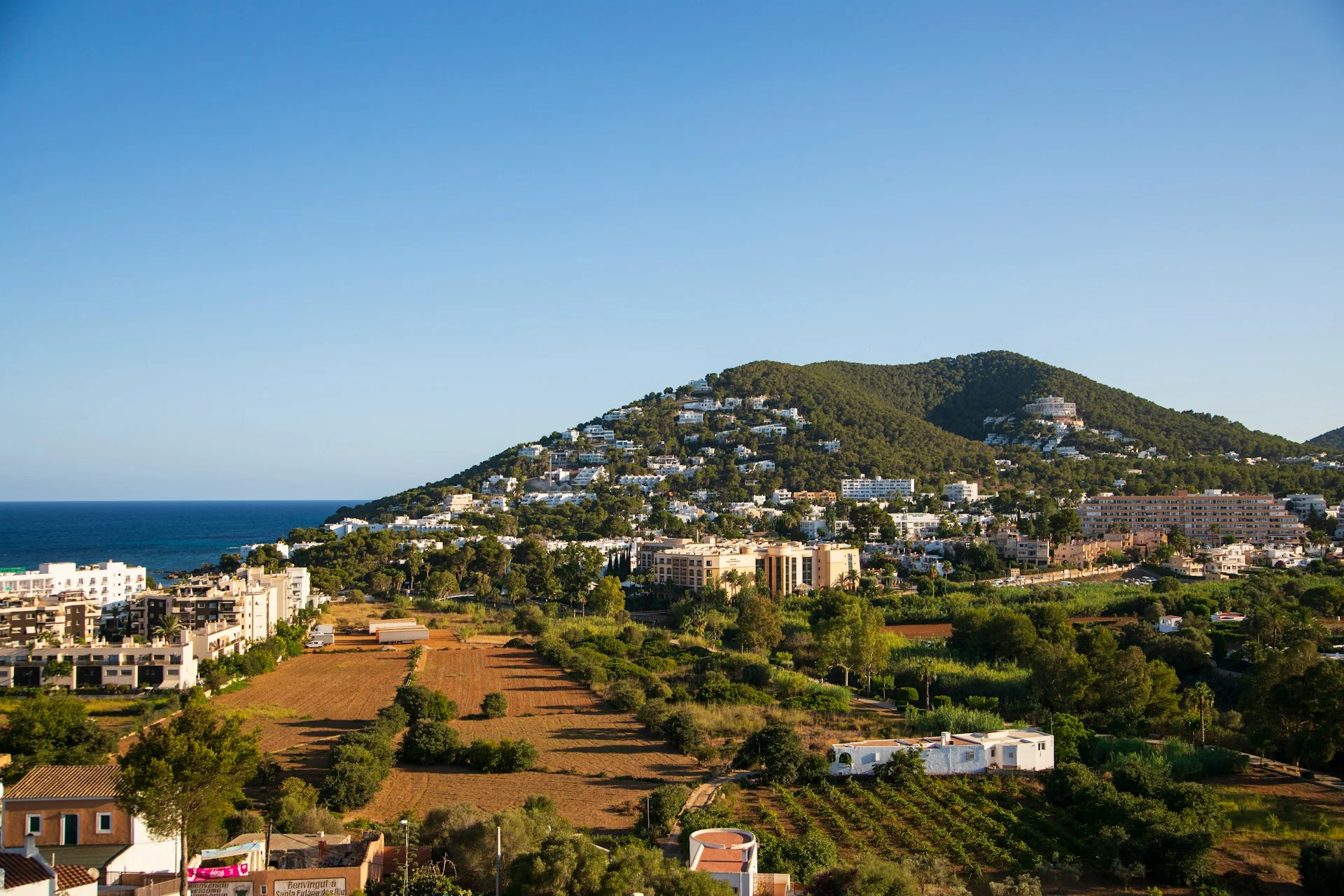
The Vi de la Terra Eivissa wine subregion is at the heart of Ibiza's rich winemaking heritage and rising international acclaim. Beyond Ibiza's party reputation, this region, centred on the clay-red valleys of Sant Mateu d'Albarca, the island's wine capital, showcases centuries of tradition and a vibrant revival of authentic, high-quality viticulture.
Ibiza, part of Spain's Balearic Islands, has a winemaking history dating back over 2,500 years to the Phoenicians. Today, the Vi de la Terra Eivissa IGP honours this legacy by producing wines that reflect the island's unique terroir and resilient spirit. These wines are serious, distinctive, and increasingly organic, capturing the essence of Ibiza's land and culture.
Whether you're a wine lover, a traveller, or simply curious about Spanish wine regions, this guide explores the history, terroir, grape varieties, wine styles, food pairings, tourism, and key producers that define the Vi de la Terra Eivissa subregion.
Ibiza is a Spanish geographical indication for Vino de la Tierra wines located in the Balearic Islands. The Vi de la Terra Eivissa IGP (Protected Geographical Indication) is Ibiza's official vino de la tierra classification, established in 1996. It ranks just below Spain's stricter Denominación de Origen Protegida (DOP) and certifies wines that capture the island's unique terroir and rich winemaking heritage. This designation covers all municipalities of Ibiza, requiring at least 85% of grapes to come from the island, allowing some flexibility while preserving authenticity.
Equivalent to France's IGP or Britain's PGI, the Vi de la Terra status allows producers to use both indigenous and international grape varieties and to display vintage years on labels. This provides key details for collectors and enthusiasts. The region's roughly 60 hectares of vineyards are mainly concentrated around Sant Mateu d'Albarca. Sant Mateu d'Albarca is considered the 'wine capital' of Ibiza.
The IGP supports a diverse range of wine styles—reds, whites, rosés, and sparkling—crafted from indigenous grapes such as Monastrell, Malvasía, and Macabeo, as well as international varieties. This balance of tradition and flexibility helps Ibizan wines stand out in the market, showcasing the island's essence in every bottle.
The maths of Ibiza wine is simple: High sun + Warm temperatures + Water scarcity + Ancient, poor soils (sandy and limestone) = Concentrated flavour. But this is a boutique operation. The entire IGP production could fit in the spillover tank of a large La Mancha cooperative.
Wine is one of Ibiza's most ancient and iconic products, with an age-old winemaking tradition evidenced by archaeological artefacts and production dating back to the 7th century B.C., during the Phoenician period. The Phoenicians didn't just visit; they set up shop and introduced the Monastrell grape (Mourvèdre) around 500 BC, bringing traditional winemaking practices that laid the foundation for the region. For centuries, Ibiza served as a hub for wine exports, shipping amphorae throughout the Mediterranean. Its wine production evolved across the Phoenician, Punic, Roman, Medieval, and modern eras.
The 19th century saw a boom when phylloxera devastated French vineyards in 1862, while Ibiza remained isolated and phylloxera-free for a time. Production reached 45,000 hectolitres, and everyone was a winemaker. However, the phylloxera plague eventually devastated Ibiza's vineyards, and the rise of tourism in the 1990s caused viticulture to collapse, nearly driving it to extinction as land became too valuable for villas and the youth left the fields for the clubs. Despite these challenges, winemaking continued through these difficult times, preserving local knowledge and tradition.
The wine renaissance began in the 2000s, as a few visionaries, locals and wealthy eccentrics, recognised the value of old vines, some ungrafted and aged 60–90 years, which contributed to the uniqueness of the region's flavour profile. The term 'Vino de la Tierra' was coined for Ibizan wines in 1996. The Vi de la Terra designation, created in 1996, formalised the comeback and emphasised quality, helping Ibizan wines gain recognition both in Spain and internationally.
Sustainability in Ibiza goes beyond mere marketing. It's a vital necessity. The island faces a chronic water shortage, making responsible practices essential.

Vineyard Hectares
WINERIES
GROWING DEGREE DAYS
Ibizan wines are dominated by the Balearic Monastrell grape, renowned for full-bodied, dense, and rounded reds with aromas of ripe figs, red fruit, and violet. This native grape reigns supreme on the island, often ungrafted and gently handled compared with mainland versions, producing structured reds and rosés. Many of these varieties also thrive on Mallorca, Ibiza's neighbouring Balearic island, which shares a similar Mediterranean climate.
The main white grape, Macabeo, yields fresh, balanced wines, while Monastrell delivers juicy reds with vibrant red-fruit and violet notes. Traditional fermentation respects local heritage, often using thyme as a natural filter, imparting signature herbal and balsamic nuances unique to Vi de la Terra Eivissa wines.
Reflecting Ibiza's artisanal spirit and rich history, these wines attract locals and visitors seeking authentic experiences.
International varieties such as Cabernet Sauvignon, Merlot, Syrah, Chardonnay, and Parellada complement native grapes, enabling a diverse range of styles, including sparkling wines.
Ibizan wines shine with a bright, transparent cherry-red colour and aromas of ripe fruit and perfumed notes. Reds offer a rich, balanced palate that vividly reflects the island's unique terroir. Whites display straw-yellow hues, lemony freshness, and a clean, fruit-forward taste.
The Vino de la Tierra designation highlights local grape varieties and vintage, anchoring each wine firmly in Ibiza's identity.
Pale salmon in colour yet structured like a light red, these rosés boast saline and herbal notes of thyme and rosemary. Vibrant and refreshing, they're perfect for summer sipping.
Key Producers: Ibizkus, Can Rich
Full-bodied, dense, and infused with Mediterranean balsamic flavours, these reds reveal notes of ripe fig, carob, and scrubland herbs. Limestone soils lend a mineral freshness, while the palate is warm and rounded, with a long, lingering finish—especially in Monastrell-based wines.
Key Producers: Ojo de Ibiza, Can Maymó
Fresh and well-balanced, whites range from floral, aromatic Malvasía to textured, saline Macabeo, often with a waxy mouthfeel. Crisp and fragrant, they leave a pleasant, lasting impression.
Key Producers: Can Rich, Ibizkus
Crafted using traditional methods from Malvasía or Chardonnay, these rare sparkling wines deliver lively, elegant bubbles—ideal for celebrations or as a refreshing treat.
Key Producers: Can Rich
Some aspects to keep in mind when enjoying these Balearic wines:
The wines of Vi de la Terra Eivissa are crafted to complement the traditional islander's diet, which is hearty, starch-rich, and protein-rich. As the saying goes, what grows together goes together. Always pair local wine with local food.
This saffron-infused fish stew, served with rice, pairs brilliantly with a crisp Malvasía, whose bright acidity cuts through the richness of the aioli and saffron like a laser beam.
A festive, meat-packed dish featuring lamb, chicken, and sobrasada requires the bold tannins and structure of a Monastrell–Syrah blend to balance its intensity.
Ibiza's signature cheesecake, made with sheep's or goat's cheese and fresh spearmint, pairs perfectly with a sweet Moscatel or a chilled glass of aromatic Hierbas Ibicencas.
Wine tourism in Ibiza is the ultimate "stealth wealth" experience. It is quiet, intimate, and usually requires an appointment.
Exploring the island's wineries is a unique way to experience the authentic culture and landscape of Ibiza, connecting visitors with both tradition and the evolving world of local winemaking.
Sant Mateu d'Albarca, considered the 'wine capital' of Ibiza, hosts an annual wine festival that attracts many visitors, where local farmers present the season's wines in a lively celebration of tradition and community. Most local wineries offer wine tastings and tours, allowing visitors to enjoy the unique wines while admiring the beautiful sunsets over Ibiza's cliffs.
Ibiza's wine renaissance hinges on three visionary producers: Ibizkus Wines, the commercial powerhouse; Bodegas Can Rich, the organic pioneer; and Ojo de Ibiza, the artistic disruptor. Each represents a distinct philosophy that collectively defines modern Ibizan viticulture.


Copyright © 2024 Vinerra Corp.


