
LATITUDE
LONGITUDE
APPELATIONS
If you think you know Spanish wine, think again. If your experience with Tenerife wine is limited to a glass of Listán from the Orotava Valley, you're only scratching the surface.
This guide is for wine enthusiasts, travellers, and anyone curious about the unique wines of Tenerife's Valle de Güímar subregion, highlighting what sets it apart in the world of Spanish wine.
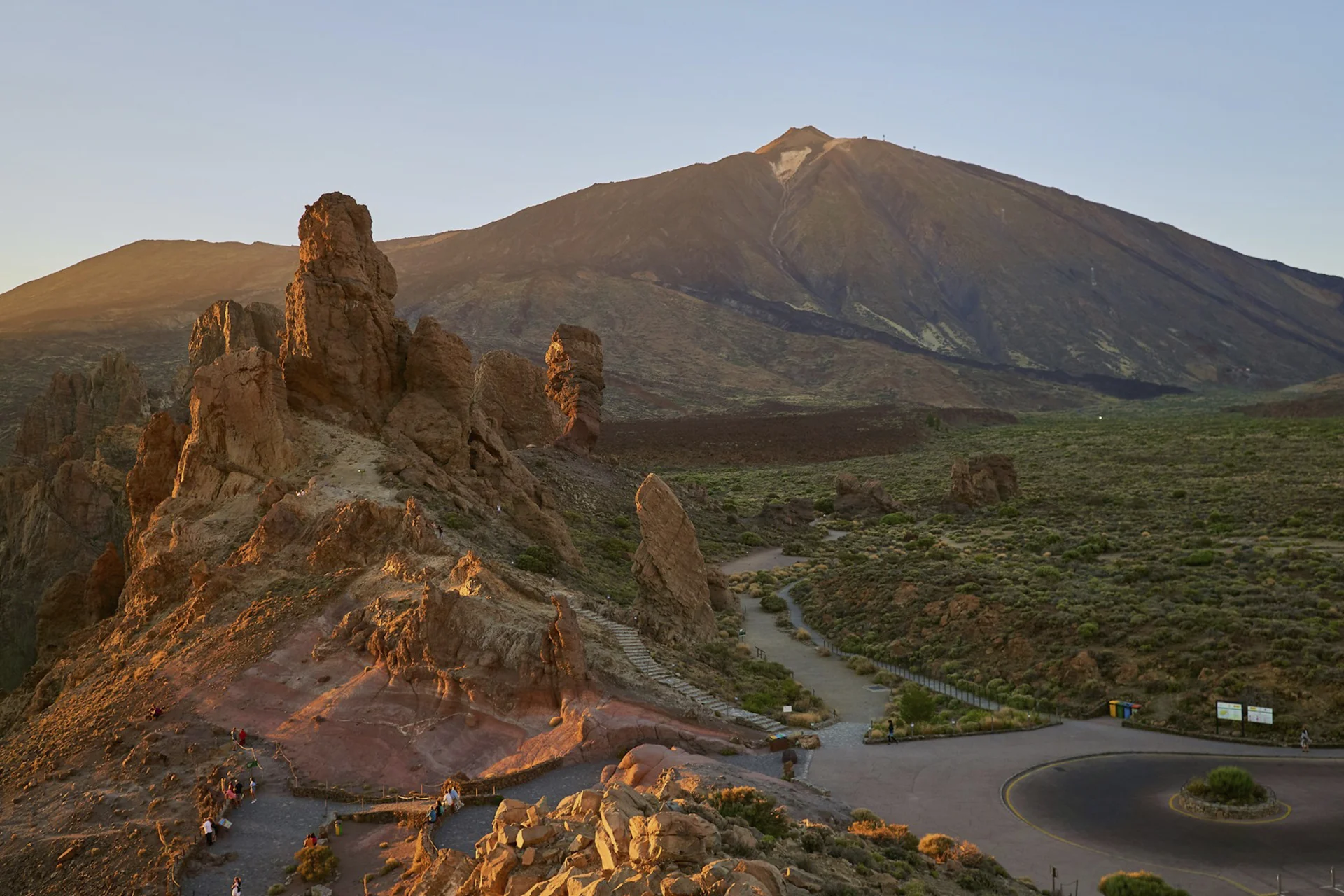
Welcome to the Valle de Güímar DO, a Denominación de Origen Protegida tucked along Tenerife's rugged south-eastern coastline, where vineyards cling to the steep slopes of the mighty Teide volcano. Here, vines defy the odds, thriving in a desert-like climate at altitudes where clouds kiss the earth.
Forget the usual wine clichés—this is volcanic grit, heroic hand-harvesting, and a verticality that infuses every sip with raw intensity. Valle de Güímar isn't just a wine region; it's a bold statement, a hidden gem poised for discovery.
This guide is for wine enthusiasts, travellers, and anyone curious about the unique wines of Tenerife's Valle de Güímar subregion. It is your insider's ticket to the extraordinary wines of Tenerife's Valle de Güímar subregion: an underdog terroir bursting with volcanic energy and bold character that's rewriting the rules of Spanish wine.
Valle de Güímar isn't a valley in the usual sense—no winding river carving through mountains here. Instead, it's a dramatic tectonic trench: a massive section of land that slid into the ocean millions of years ago, leaving steep, amphitheatre-like slopes. The terrain is rugged and becomes steeper the further you move from the coast, creating a natural "moat" that forms a unique microclimate. This microclimate shields the vines from the harshest Atlantic winds while trapping just enough moisture for them to thrive. The Denomination of Origin Valle de Güímar spans a roughly rectangular area about 18 kilometres long and 8 kilometres wide.
This distinctive region encompasses the towns of Arafo, Candelaria, and Güímar. It's a land of contrasts: sun-soaked beaches along the coast, dense pine forests atop the slopes, and, nestled in between, a breathtaking mosaic of terraced vineyards. This patchwork of nature and human endeavour makes Valle de Güímar one of the most exceptional wine destinations, not only in Spain but across Europe.
Valle de Güímar operates on an intimate scale: approximately 720–750 hectares across twenty wineries, planted between 175 and 1,500 metres in elevation. The region receives minimal precipitation (150–300 mm annually) yet produces predominantly white wines in a high-altitude, desert-adjacent environment. White wines account for 65% of DO production in Valle de Güímar. The region’s unique subtropical climate is characterised by dry, sunny weather, with variations due to altitude.
The history of Güímar is less about aristocratic estates and more about subsistence and trade. For centuries, the "Truque" (barter) system defined the area. Farmers in the high country (medianías) grew grapes and potatoes to trade with fishermen on the coast. Wine wasn't a luxury; it was currency. Viticulture in the Canary Islands began after the Spanish conquest in the 15th century, when European settlers introduced grapevines.
While the north of Tenerife (Orotava/Tacoronte) dominated the export boom of "Canary Sack" (Malvasía) to Shakespeare's England in the 16th century, the south was often the workhorse. In the 16th century, Canarian wine, particularly sweet Malvasía wines, was highly sought after in European courts and mentioned by William Shakespeare.
The game changed in 1996, when the Valle de Güímar DO was officially established. This regulatory "IPO" allowed the region to pivot from bulk production to quality control, focusing on bottling unique varietals rather than selling off grapes. The Valle de Güímar wine appellation was granted Denominación de Origen status in 1996.
Today, the region is in its "Scale-Up" phase. Quality is proven, awards are flowing in (including "Best Wine of the Canary Islands" in 2025), and the market is waking up.
Sustainability in Güímar isn't just a buzzword; it's a survival mechanism.

Vineyard Hectares
WINERIES
GROWING DEGREE DAYS
The Alisios winds hit the island's north, creating protective cloud cover as they sweep around Mount Teide's volcanic mass. By the time the air reaches Güímar on the south-eastern slope, it is drier yet cool enough to temper the African sun. The climate in southern Tenerife is mild and temperate, influenced by these trade winds. Extreme diurnal shifts at 1,000 metres—with sharp temperature drops at night—lock acidity into the vineyards planted at high altitude. This creates wines of razor-sharp minerality.
Soil composition shifts dramatically with altitude. Coastal zones feature hot, saline sandy soils. The medianías (mid-slopes) showcase pumice and Jable (volcanic ash) that retain moisture like a sponge. High-altitude terrains (up to 1,500 m) contain clay-rich volcanic soils with superior water retention, producing structured, age-worthy wines. There are three types of soil in the Valle de Güímar DOP: sandy, pumice-based, and clay.
Valle de Güímar is a living museum of pre-phylloxera vines. The roots here are original; there is no grafting onto American rootstock. This connects the vine directly to the volcanic soil without a filter. The key white grapes within the DO are Listán Blanco, Malvasía Aromática, Moscatel, and Gual, while the key red grapes are Listán Negro, Vijariego Negro, Moscatel Negro, and Tintilla. The authorised grape varieties include Listán Blanco, Moscatel (part of the Muscat family), and Vijariego. Valle de Güímar's red wines are mainly produced from Listán Negro, Negramoll, and Tintilla. The Palomino grape is the most prevalent in the region's vineyards.
Beyond the headliners, the DO authorises a "bench" of varieties that add complexity or serve niche experiments. These include Albillo Criollo (excellent-quality whites), Bermejuela, Forastera Blanca, Sabro, Vijariego Blanco, Burrablanca, Breval, and Pedro Ximénez. On the red side, you will find rare gems such as Bastardo Negro (Baboso), Castellana Negra, and international varieties that are permitted but rarely dominant: Cabernet Sauvignon, Merlot, Pinot Noir, Ruby Cabernet, Syrah, and Tempranillo.
The Valle de Güímar wine appellation is dominated by dry and aged white wines. The region is 85% white, but innovation is emerging at the margins. Valle de Güímar also produces sparkling wines from Listán or Malvasia, mineral-driven reds, and sweet, complex wines from Malvasía or Moscatel.
The wines from Valle de Guíjar pair wonderfully with traditional Canarian cuisine:
Güímar is no Napa Valley. There are no flashy "wine trains" or Instagram-perfect tasting rooms here—this is authentic adventure tourism at its best. Imagine hiking along volcanic coastlines in the morning, savouring wines from century-old vines at lunch, and swimming in the Atlantic at sunset. The Ruta del Vino takes you from pine forests down through terraced vineyards to black-sand beaches in just 20 minutes, perfectly capturing the region's dramatic contrasts. Here, you'll meet winemakers, not PR reps. Tasting rooms are humble concrete cellars with handwritten notes. There are no crowds or tour buses—only genuine connections and the rewarding feeling of supporting a fragile, heroic agricultural tradition.
The ideal months are May, June, and October, when temperatures hover around 23°C (73°F), rainfall is minimal, and crowds are light. From December through March, enjoy mild weather (17–21°C / 63–70°F) and freshly released wines from the September harvest. Avoid the intense heat and peak tourism in August and September.
Pro Tip: Early December is a sweet spot—new wine releases coincide with perfect weather, and wineries open their cellars for exclusive tastings of freshly bottled vintages.
Four producers define Valle de Güímar's identity: a cooperative setting regional standards, an eco-innovator redefining high-altitude viticulture, a purist obsessed with single-vineyard expression, and a historian preserving century-old vines rooted in local culture. Each is working hard to raise the quality bar within this DO.


Copyright © 2024 Vinerra Corp.


